“Gerunds are words ending in “ing”. It is believed that using gerunds can help reinforce the positive behavior another would like to see rather than attacking a bad behavior. For example, a teacher might see students running down the hall and calmly say “walking” rather than yell “stop running” in an agitated voice. He might say “gently” (an adverb) instead of insisting “calm down!” (from Positive Discipline by Jane Nelson).
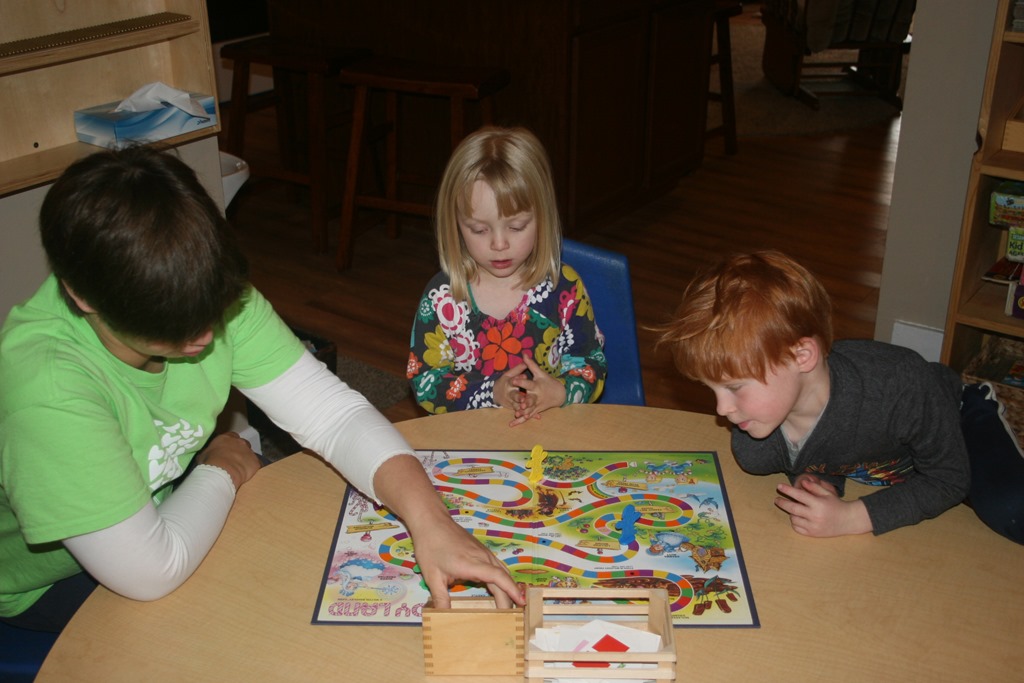
Best practice in the early childhood classroom encourages the use of gerunds. Instead of “stop talking”, it’s “listening.” Instead of “stop whining!” it might be, “talking.” So what to do when a group of friends are playing Candy Lane, and you find yourself saying “You can’t jump around from color to color. You have to follow the path. You have to follow the rules of the game.” While it’s absolutely true (right?  ), it didn’t sound good when I heard the words spoken. There’s another way!
Gerunds. Not “You can’t jump from color to color!” but instead, “following”. Same message, different semantics.
Lots of friends followed Santa and became his reindeer. Then their game morphed and they followed Santa as he revved up his Rino-Dozer.
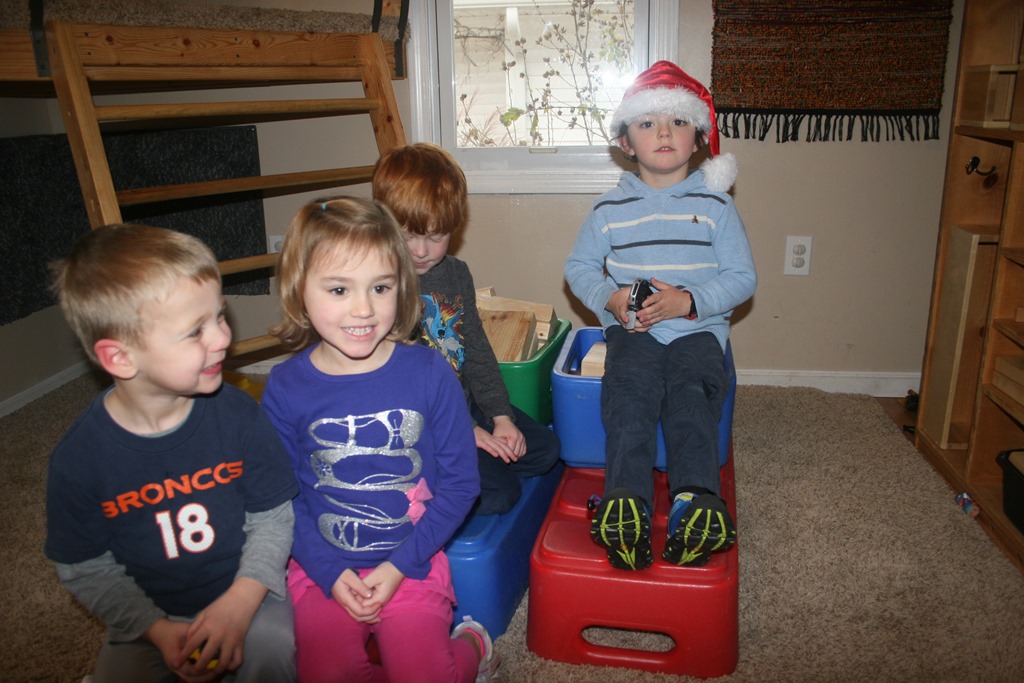
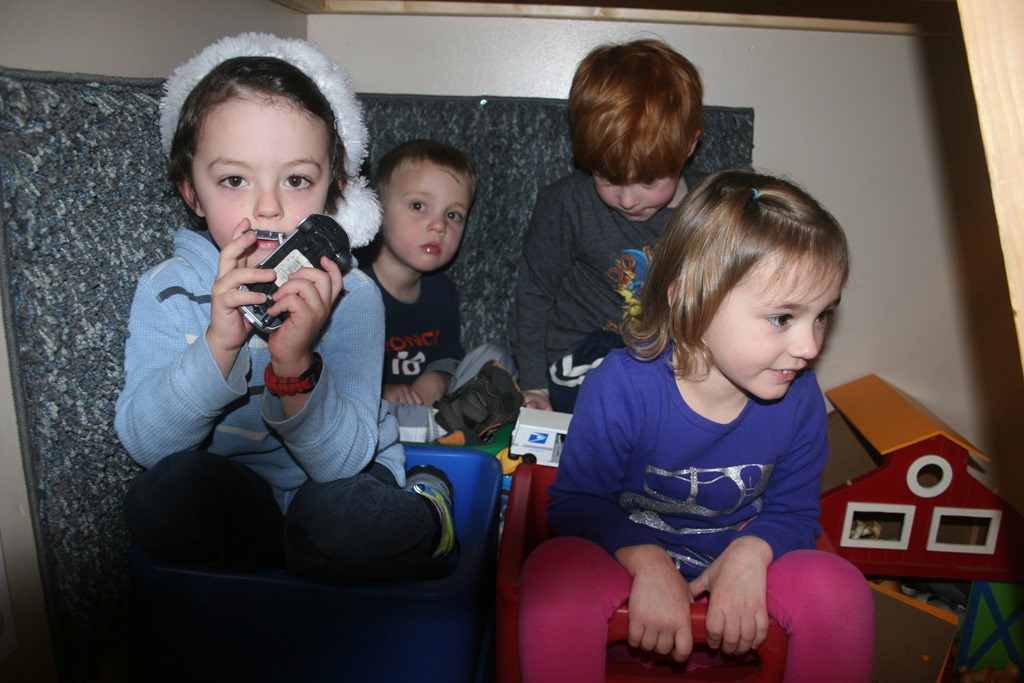
Following. Follow the path. In a board game you do have to follow the rules of the game and the path chosen for you. In creative play—-you can choose! We think both are important life skills, and semantics are important too.
“Stop hitting!”
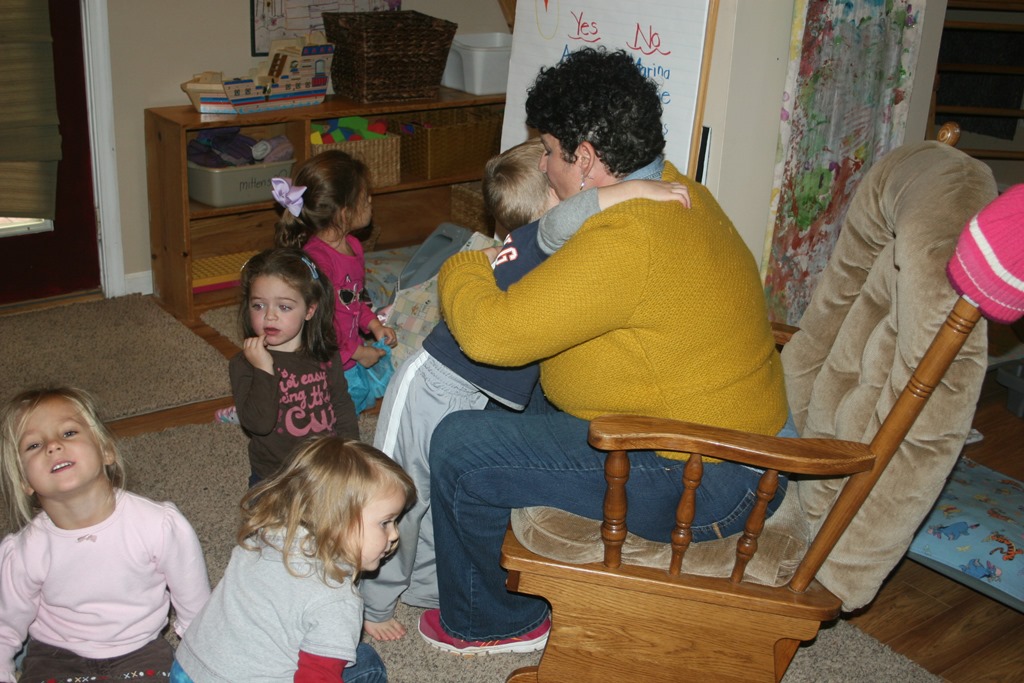
“Hugging.”
Wee Sprouts: Cucumbers. Breakfast: Cereal and pear slices. Lunch: Whole wheat pasta with red beans, apple/persimmon fruit salad and green beans. Snack: Rice cakes and peanut butter.