Good Afternoon!
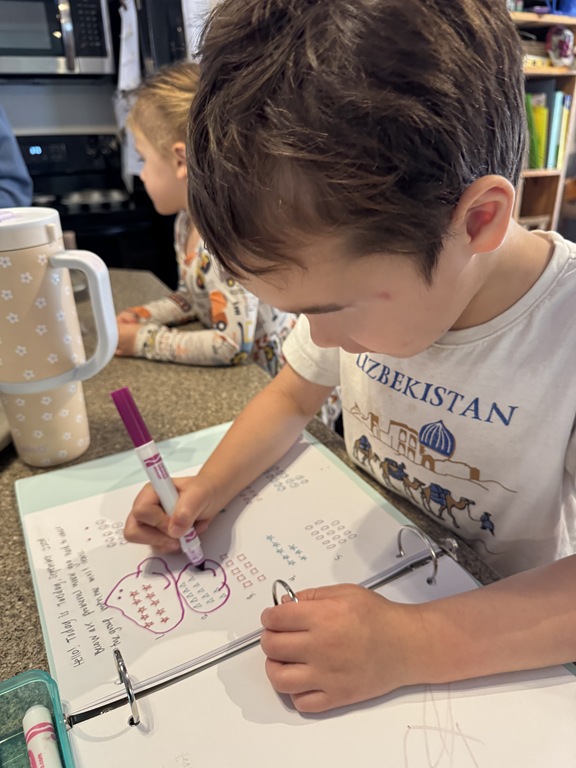
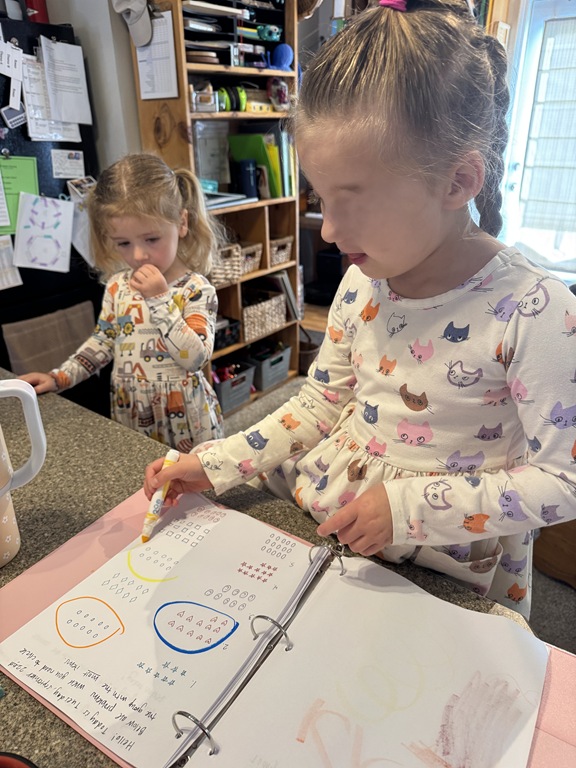
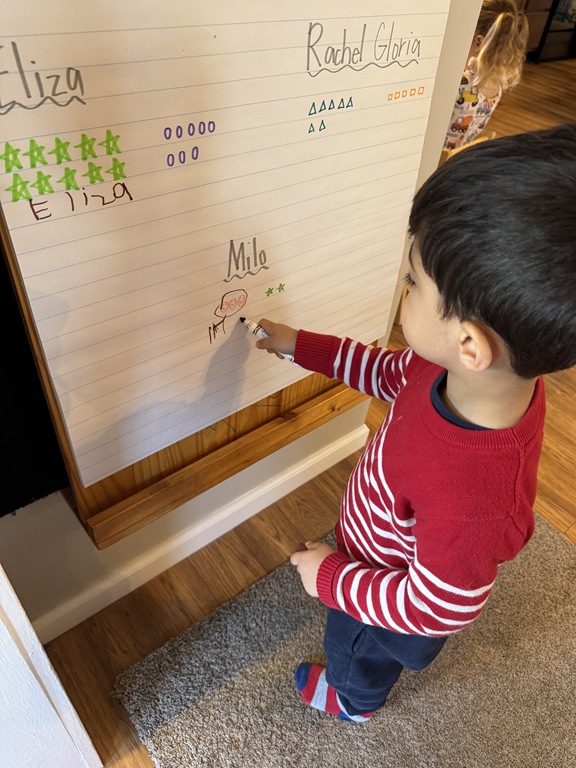
Our two kindergarteners completed their sign in activity this morning that worked with comparison words, specifically the word ‘most’. They looked at two groups at a time and deciphered which group had the most items. One kindergartener worked at counting each item and then figuring out which number out of the two were larger. The other kindergartener looked at the groups and could tell which one had more without having to count—both got to the correct answers in very different ways! When we count one-to-one, we have to make sure we’re slowing down, not getting too far ahead of ourselves or our count will be off. Student A not only circled the correct, larger group but he also added a happy face for the bigger group and a sad face for the smaller group!
K.NS.9: Use correctly the words for comparison, including: one and many; none, some, and all; more and less; most and least; and equal to, more than, and less than.
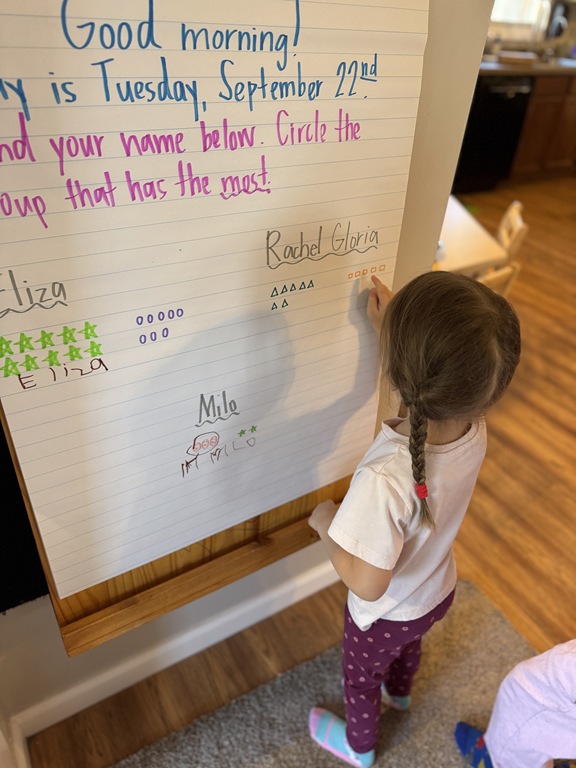
Our PREK1 group completed a similar activity that was appropriate for their developmental level. Each PREK1 group member came to the board where they located their name and the two groups of items underneath their name. They circled the group with more items.
Later on in PREK1 group, we started talking about text genres. We started with fiction as we read, ‘The Day The Crayons Quit’. Before even starting to read the book, we looked at the cover and made a list of reasons why this would be a fiction story. At the end, we made a list on our chart as to the reasons why it was fiction. Children were eager to come up with as many examples as possible! Tomorrow, we’ll introduce the second text genre!
K.NS.9: Use correctly the words for comparison, including: one and many; none, some, and all; more and less; most and least; and equal to, more than, and less than.
K.RL.3.1: Recognize familiar narrative text genres (e.g. fiction, nonfiction, fairytales, poems).
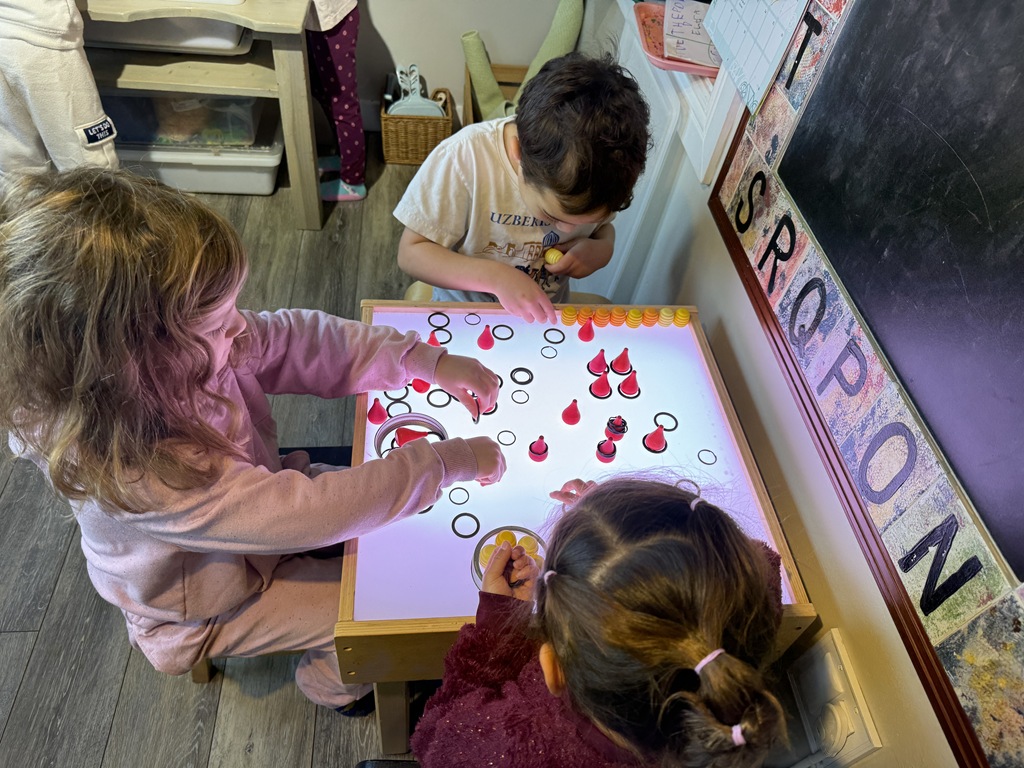
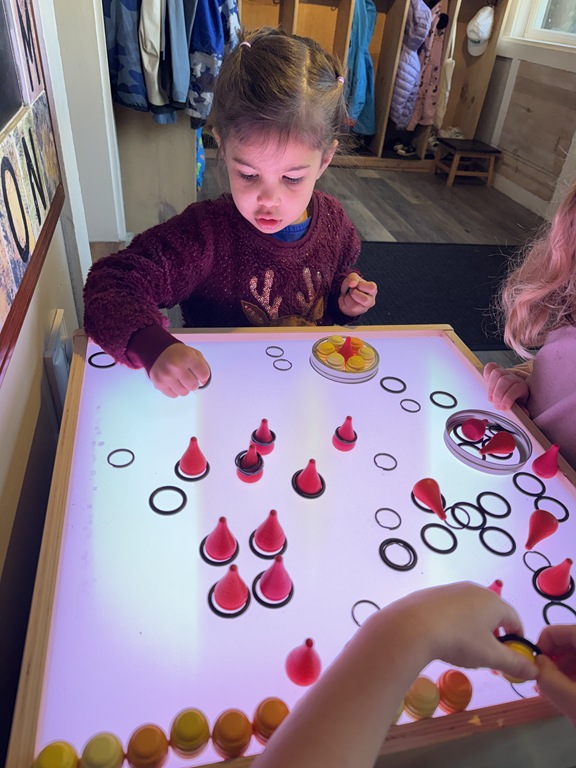
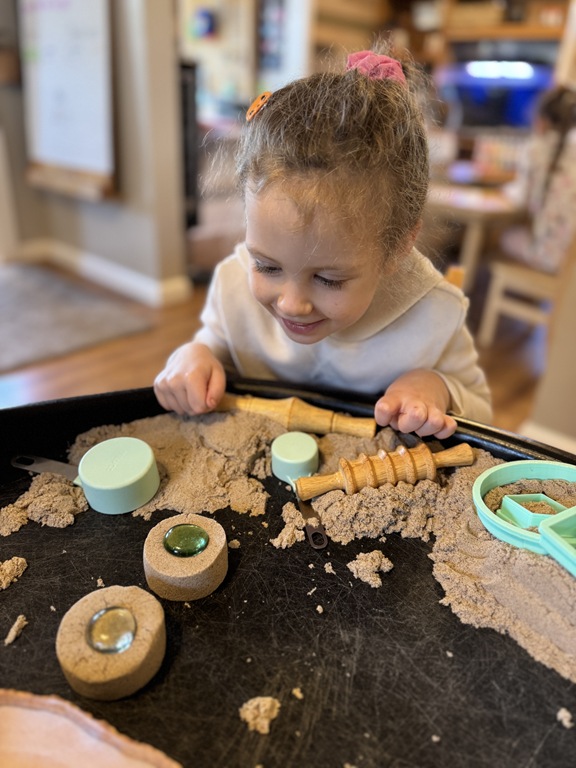
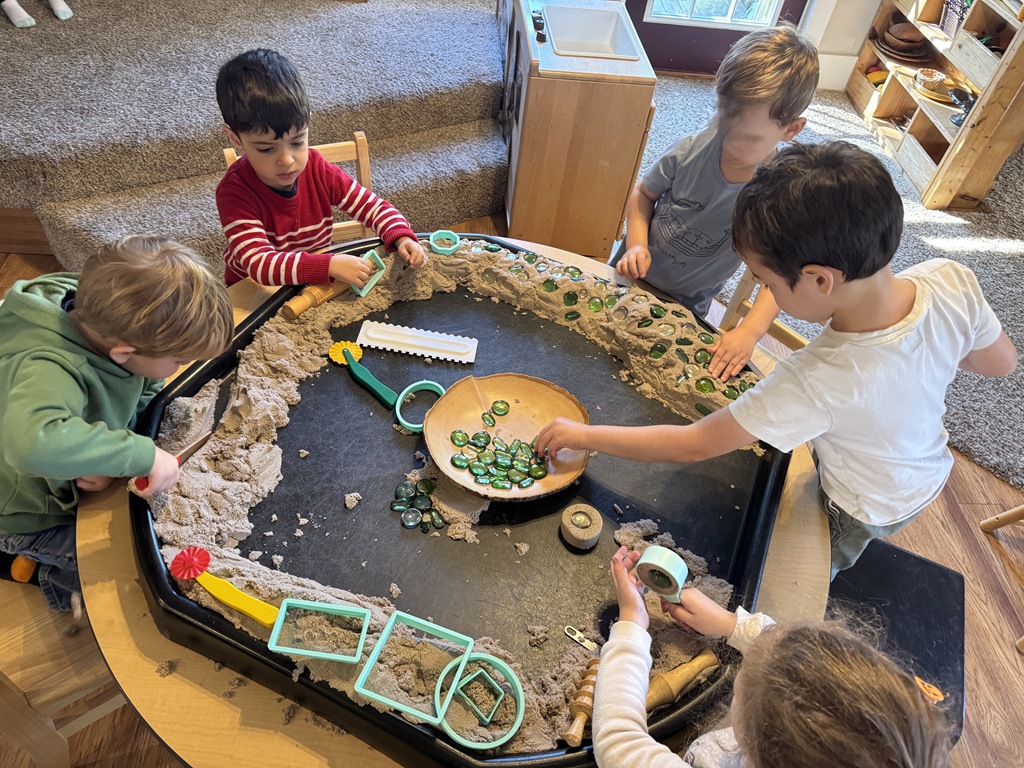
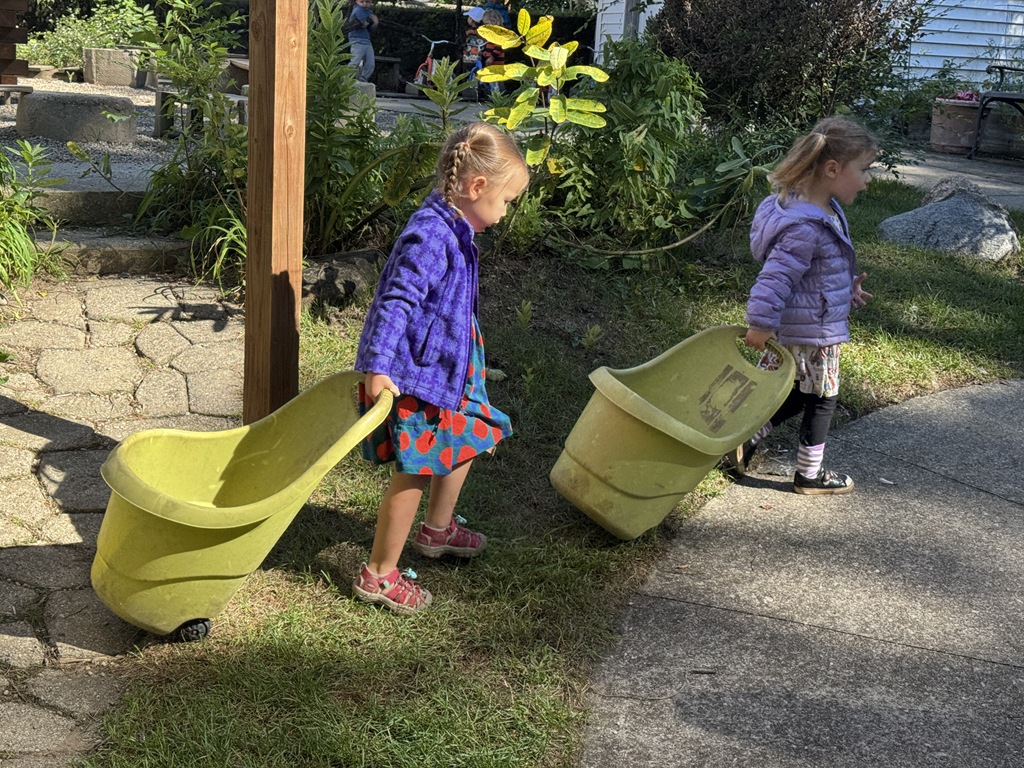
You may have noticed we often use Loose Parts play in a variety of activities. This means the activity invites kids to use their imaginations to decide how to use materials without fixed rules in place to direct kids how to use them. In this way, kids can use their own creativity to build complex imaginative worlds around simple objects. Kids often come up with lasting play schemas that evolve as they go. They can sustain attention for long periods of time in this way. Groups of kids often work together, building strong language and social skills as they communicate their thoughts and ideas. This is the kind of play that teaches kids “how” to think rather than what to think, developing creativity and higher level cognition.
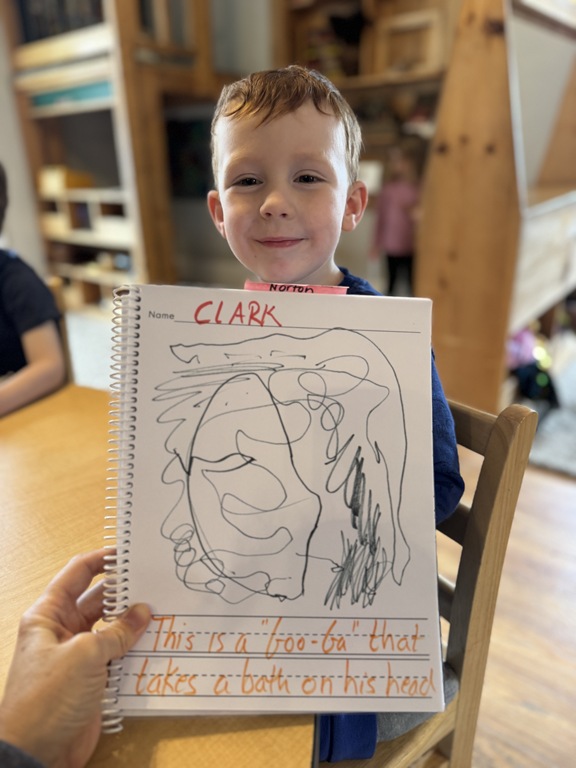
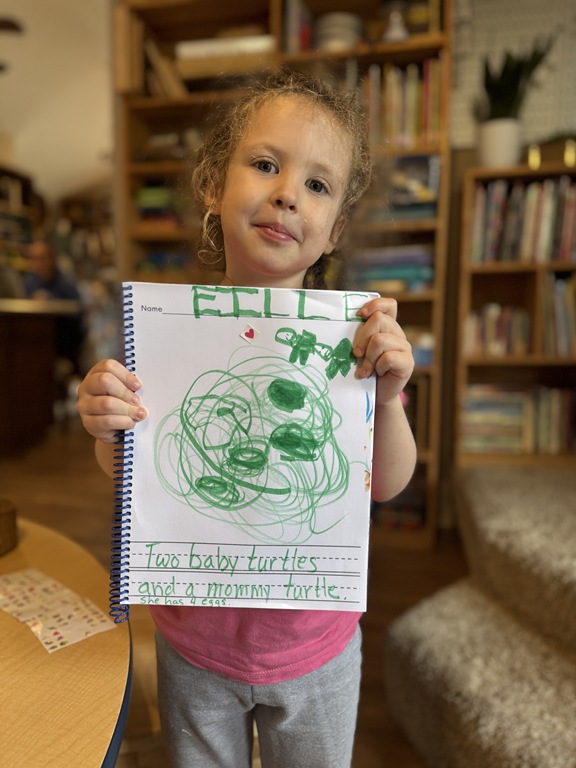
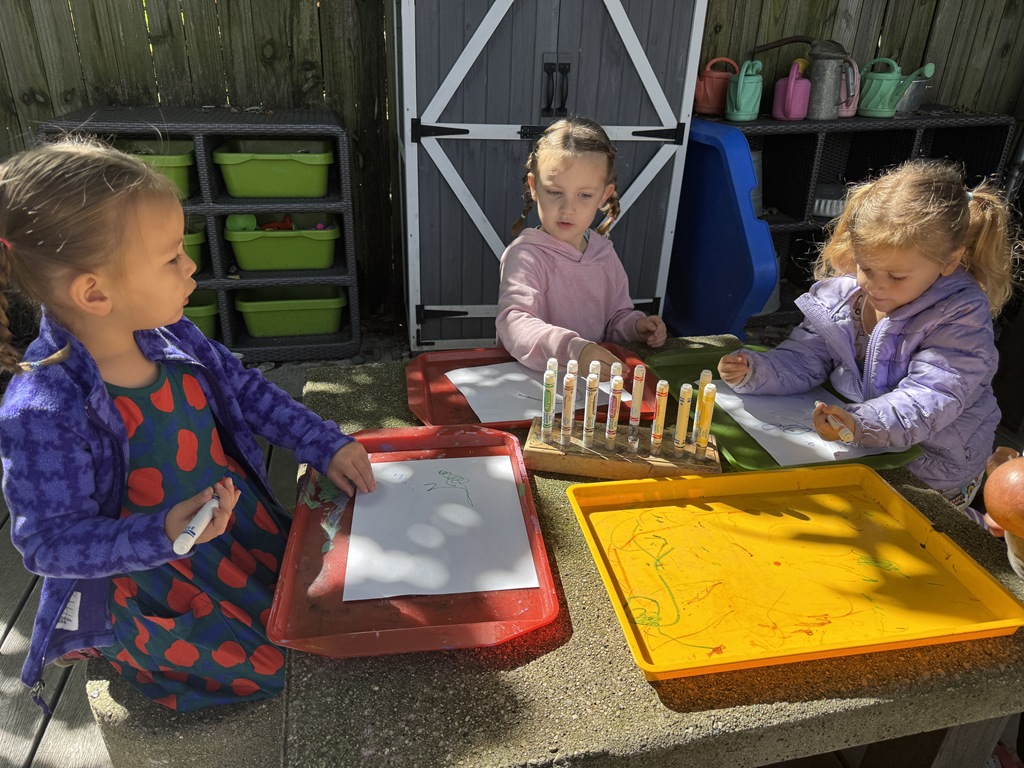
Our young journal group has been creating more detailed and creative journals every day! One friend shared that he had drawn a fictional creature he had invented that “took a bath on its head”, while another friend drew a “mommy turtle with baby turtles”. The mommy turtle also had “four eggs”. It’s great see all this growth in language/communication from our younger friends!
We hope you enjoy a few more pictures!
Breakfast: Puffins cereal with fresh strawberries.
Lunch: Peanut butter on whole wheat tortilla, fresh bananas/peaches/strawberries/cantaloupe, and fresh tomatoes/cucumbers.
PM Snack: Homemade blueberry muffins with cheese.
Wee Sprouts: Fresh snap peas/peppers.
Have a lovely afternoon!
~Wee Friends Teachers
Link to pictures:2026-09-22