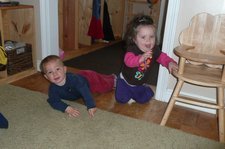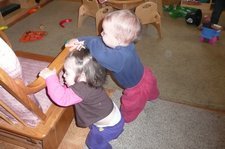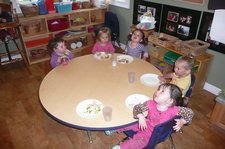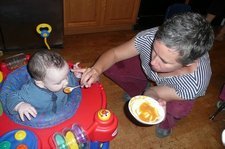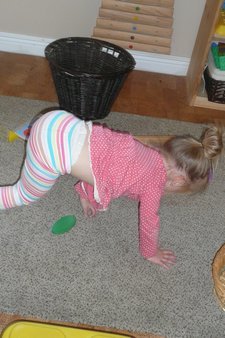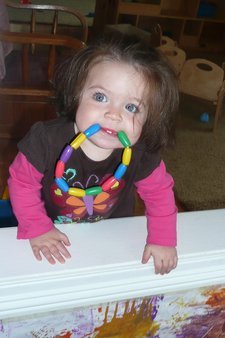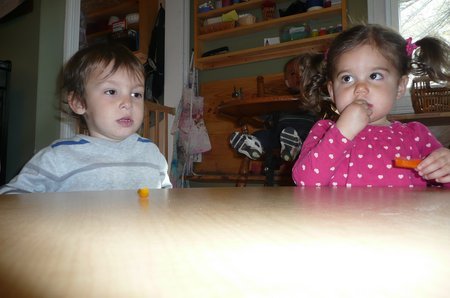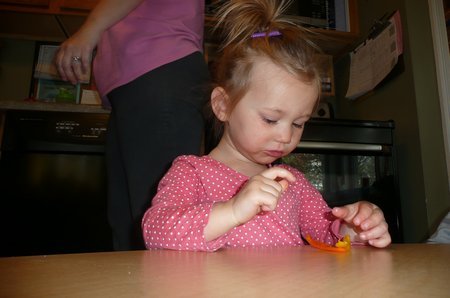
WWF 12-16-11 Dance, dance, dance!

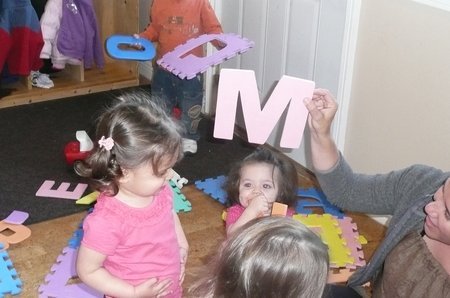
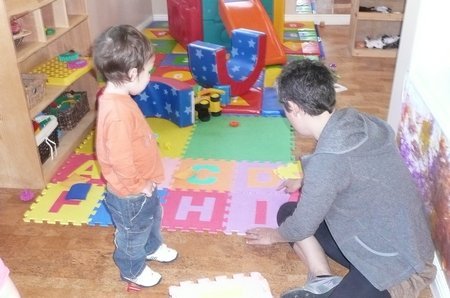
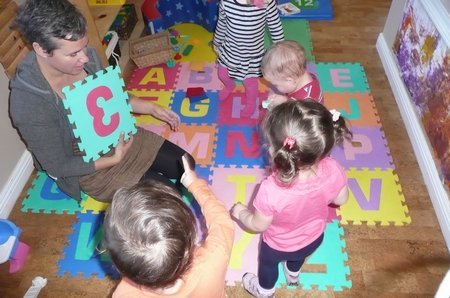
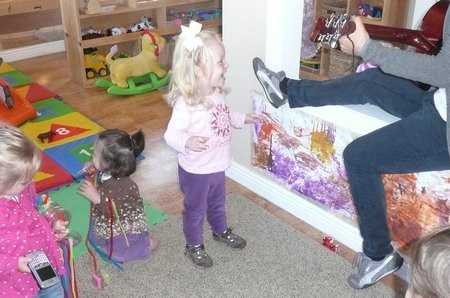
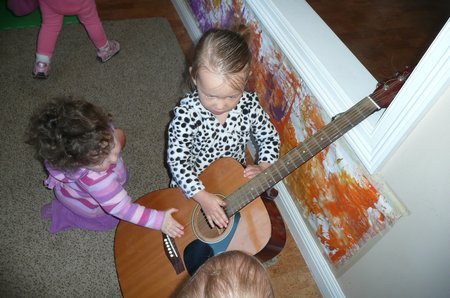
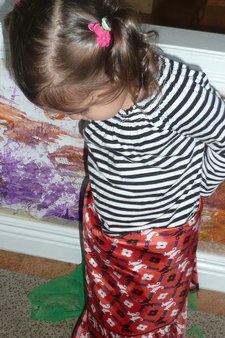
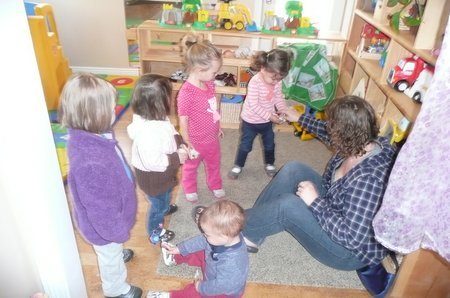
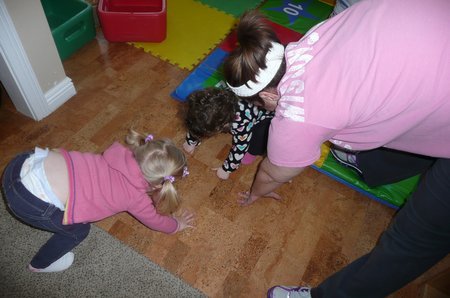
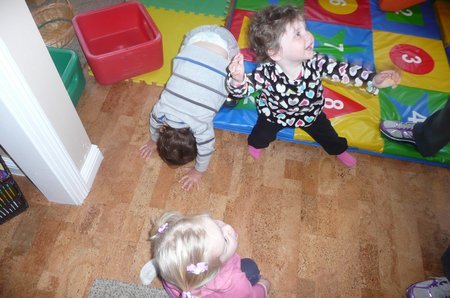
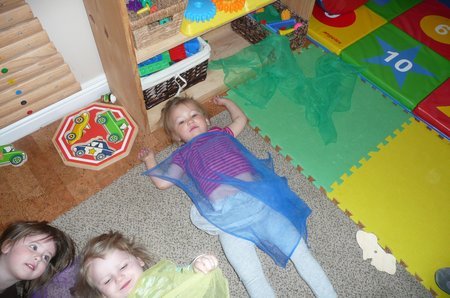
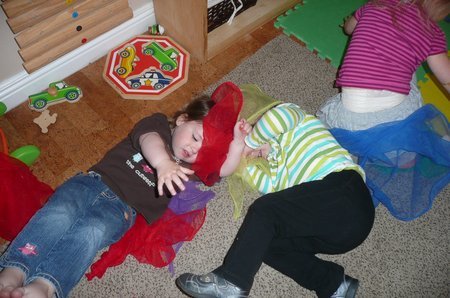
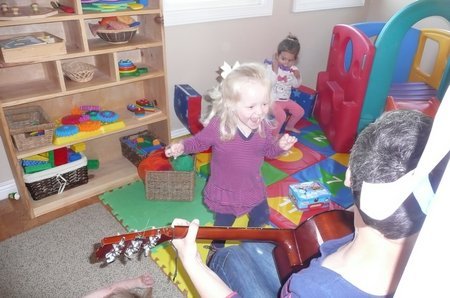
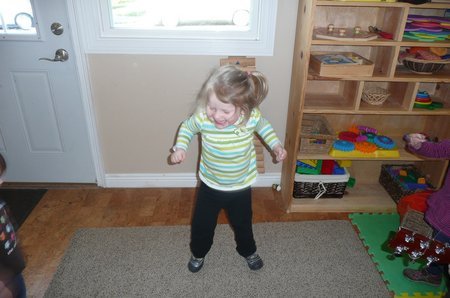
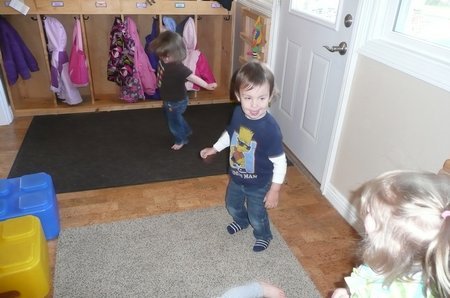
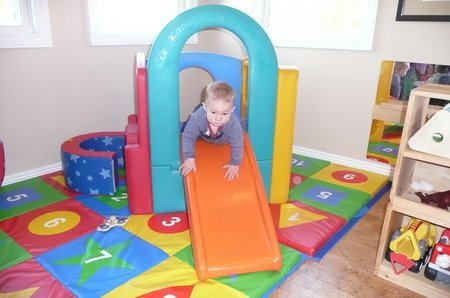
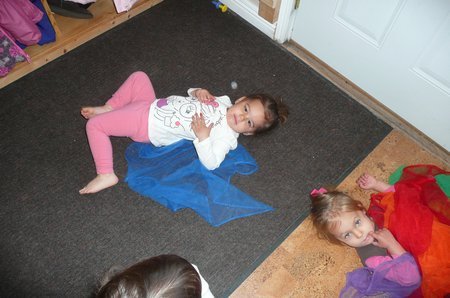
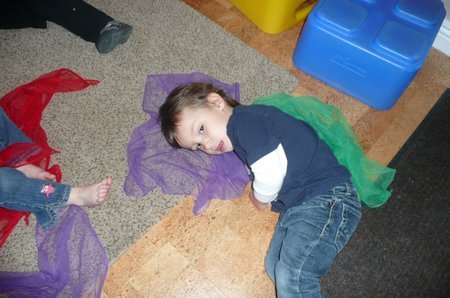
Yesterday afternoon the children dressed up and danced to “My Favorite Things” from Sound of Music. Jada immediately looked for a dance partner and danced with Olivia and Elizabeth.

12-16-11 011 12-16-11 012


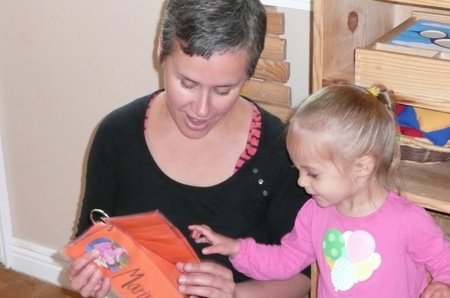
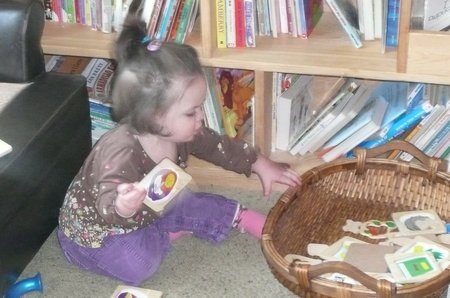
Some of our favorite moments here at WWF are those when the children independently initiate and engage in a self-directed activity, such as looking at books.

12-16-11 001 12-16-11 064

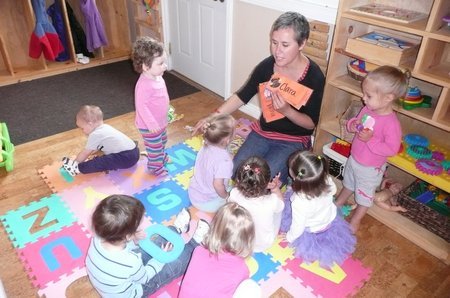
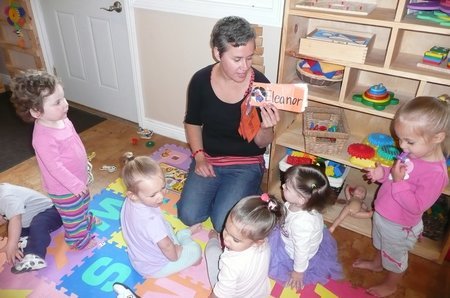
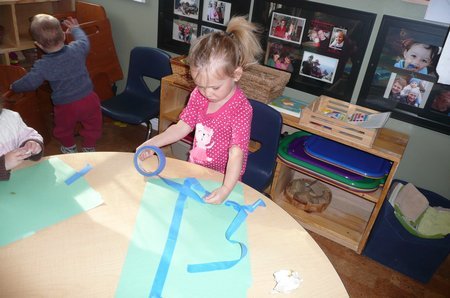
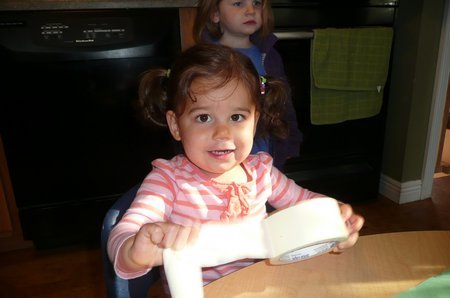
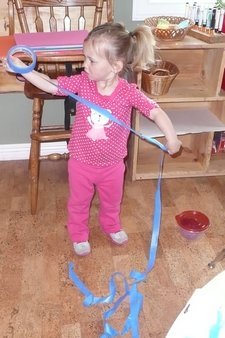
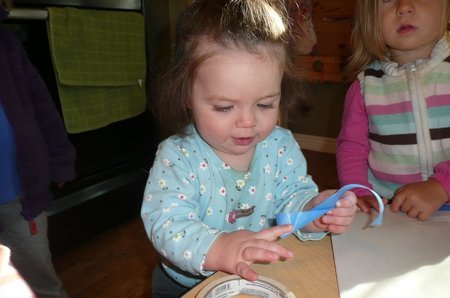
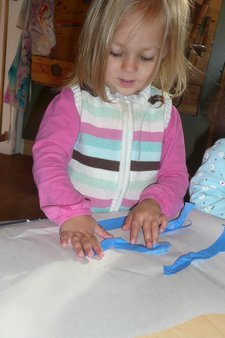
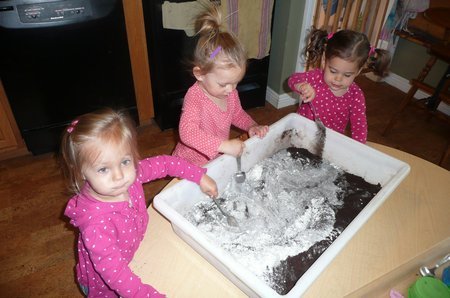
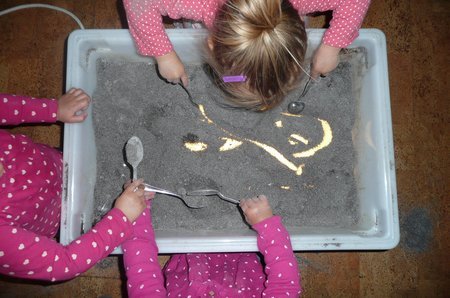
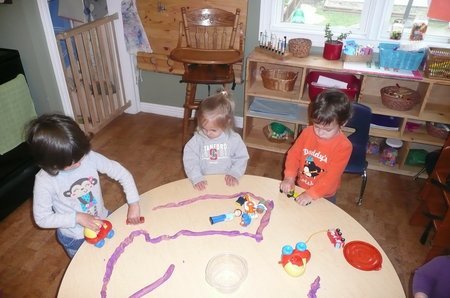
Here are some fun moments from today. Miss Lisa added a component to our name game—she asked the children to identify whether the child on the card is a boy or a girl. Elizabeth surprised us by correctly labeling most of the children. We decorated a gingerbread men and practicing drawing letters in shaving cream + glitter + ribbon. We also enjoyed some fresh air outside and sang songs while walking around our circle. We did Ring around the Rosie about 30 times!

12-16-11 024 12-16-11 015

12-16-11 016 12-16-11 037


12-16-11 042 12-16-11 048

12-16-11 053 12-16-11 056

Thank you to Jada’s family for the fun snowman books for all the children. We also are missing Chloe today and hope that her ear surgery went smoothly today. We hope you all have a peaceful and enjoyable winter break. Smiles of the day brought to you by Ellie and Elizabeth. Cheers!

12-16-11 055 12-16-11 057


WF Daily Explorations 12/16

009

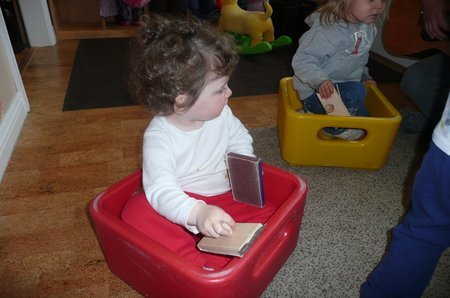
Tami wrapped up two big boxes and Wee Friends spent a long while this morning, snuggling into, jumping out of, stacking and toppling over the boxes.

008 002 003

005 012

It was a happy morning with lots of smiles and collaborative play!

013 014 015

022

023

Kai and Macy helped Melinda put artwork into each WF’s cubby. They identified the names on the artwork and matched them to the names on the cubby. These are ready to take home today!

028 027

024

Using glittery winter stickers, friends exercised fine motor muscles and concentration as they decorated a paper christmas tree.

030

Our three youngest boys chose to leave the art table to help fold towels!!

046

048 049

033 034 036

039

Each friend successfully sequenced between one and four steps: 1) taking the towel out of the basket 2)folding it multiple times 3) stacking it 4) delivering the stack of towels to its basket. After each of his trips, Nate exclaimed:

“We did it!!”

When we have all said goodbye this evening, Tami will return tonight to begin renovating the Wee Friends classroom. She, Charles and a contractor will be working fast and furiously over these next two weeks to break down walls and reconfigure our space providing more visibility throughout the classroom. She has said that when we return in the new year, it will be quite transformed!

On behalf of Tami and the Wee Friends staff, we wish you all a happy holiday and restful vacation. As always, we are grateful for all the ways you support Wee Friends and we thank you for sharing your beautiful children with us!

See you in 2012!!

WWF, Winter Wonderland!! 12-15-11

Today we brought out our felt letter and number box. Each child took a letter from the box, we helped them identify their letter, and they placed it on our black felt board. Max and Jada were particularly interested in this project.

12-15-11 004 12-15-11 005

Others spent time climbing and sliding on our climber. In our art space Elizabeth and Jada worked hard practicing cutting snowman paper with (child-friendly) scissors. We also explored soft, glittery, shiny, and puffy textures in a sensory exploration

12-15-11 015 12-15-11 016

12-15-11 012 12-15-11 013

Enjoy your day!

12-15-11 022

WF Daily Explorations Thursday 12/15

022

This morning, Melinda led Wee Friends in the exploration of three different nutcrackers: Simon’s ornamental nutcracker, a hand held nutcracker and a table top nutcracker. First, they examined each nutcracker closely by passing them around for each friend to hold. Using a potato, orange and a hazelnut, they studied which size object fit into which nutcracker. They discovered Simon’s soldier nutcracker had a very smooth surface where the nut is cracked, but the hand held cracker had a rough, almost sharp place to crack open a nut. On the table top cracker, they figured out how to spin a cylinder that would adjust to the size of the nut you placed in it. They discussed what the outer shell is and what the meat of the nut is.

012 027 029

034

They created a message board asking the question, “Which nut cracker do you like best?”. Each friend used their favorite nutcracker to crack open a hazelnut.

032

How the Grinch Stole Christmas has been this week’s favorite book. After this morning’s reading of it, a couple friends chose to create a portrait of the Grinch, using the book and our Grinch lovie as models.023

019

There was lots of singing and music making this morning: “Jingle Bells”, “Sunshine on My Shoulders”, and “Puff the Magic Dragon” were among the requests.

038

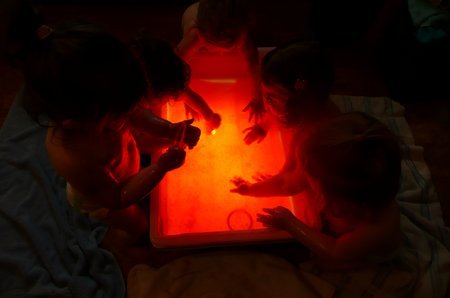
We added jingle bells to the light table and friends enjoyed both the reflection of light and the jingling! They have spent many hours this week sorting a variety of translucent materials into plastic mini quiche trays!

042 043

045

For breakfast we served peanut butter and toast with clementines. Lunch was cream cheese sandwiches on whole grain flat bread, mixed veggies and grapes. For snack we will serve animal crackers and apples.

Have a great day!

WWF, No rainy day blues! 12-14-11

Today Miss Lisa added a new counting book to our morning group activity “Ten Little Monkeys’ by Keith Faulkner. The children were able to place paper monkeys in the trees. Here is a picture of Ellie placing her monkey high in the tree.

12-14-11 022 12-14-11 019

Trucks and trains were of particular interest today

12-14-11 026 12-14-11 027

Lots and lots of book reading!

12-14-11 044 12-14-11 031

Stops at Marty’s hair salon

12-14-11 035

and some experimenting with mixing color and shaving cream

12-14-11 038 12-14-11 036

We had a sing-along at the lunch table while we waited for our lunch. Marty and Lisa lead a round of songs and the children kept asking for “MORE!” A favorite was “Make new friends”and “I stuck my head in a little skunks hole”. Lunch today was rice with beef, corn, and apples.

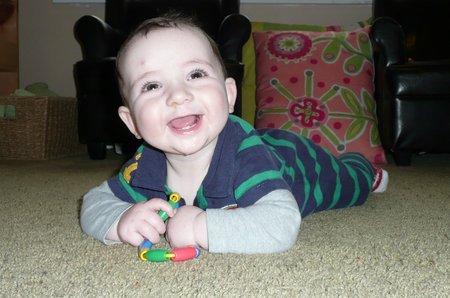
A beautiful smile to help brighten your day…

12-14-11 013

WF Daily Explorations, Wednesday 12-14-11

Our morning was spent creating the most beautiful Christmas tree ornaments! I saw the idea on the blog, playathomemom.com and couldn’t wait to try it with both classrooms!

073

The children made these “I Spy” ornaments by filling them with assorted items like letters, trees, snowflakes, beads, tinsel, fuzzy balls, ribbon, and sparkly snow. It was neat to watch the different personalities come out as some children quickly filled their ornaments, while others spent up to 45 minutes carefully selecting which items they wanted to use. This activity demanded some real problem solving as many of the objects were larger than the size of the opening in the ornament. It also required patience as the glittery snow went in very slowly. 7.10 Use new vocabulary learned from experiences.F.7.12 Follow two-step spoken directions with prompts.F.7.13 Use trial and error to solve a simple problem.F.1.18 Apply one-to-one correspondence with objectsF.1.22 Name groups of objects.F.3.6 Identify attributes of objects.F.3.7 Give reason of placement of objects.F.5.4 Use any descriptive word or gesture to express amount or size.F.6.15 Use trial and error to solve problems.

078

THE ORNAMENTS ARE GLASS AND WILL BREAK IF DROPPED OR SQEEZED! So please be careful with them in transport.

We will be sending home a variety of Christmas projects today. Enjoy!

Other pictures from today and yesterday afternoon!

034

036

026


024


039


030


046


Some stories…

022

021


041


Yesterday afternoon, wrapping our blocks for our Christmas tree.

019

008


023


We had grits and bananas/apples for breakfast. For lunch we had brown rice with roast beef, whole wheat bread, mixed vegetables and pear slices.

Have a great afternoon!

WWF, Time for the WWF social event of the year, the ” Snow Ball”

This morning Frosty joined us in our circle for the Donut Shop Game and danced with the children while listening to his song. The children were able to identify important parts of a snowman: hat, eyes, nose, mouth, scarf, arms, mittens. The children also identified their own noses while studying the snowman. It was then time that we became snowmen ourselves! Miss Lisa wrapped the children up in rolls of toilet paper, then we put on hats, mittens and scarves.

12-13-11 016

12-13-11 026

12-13-11 028

The children also took time this morning to read individually on their rugs. Many are old enough now to identify a space of their own and enjoy some quiet focus time exploring books or other individual activity.

12-13-11 034


After that, the children decided to dress up. We talked about going to a big party and called it the “Snow Ball.” Miss Amy was busily getting the children in their party dresses, the boys in their “glittery pants,” and let the music begin! They danced to “Jingle Bells,” and the “First Noel,” around our circle.

12-13-11 030

Shaving cream filled the kitchen table, which of course, was snow! We brought out our monkeys to let them play in it. Elizabeth loved this.

12-13-11 035


For breakfast this morning, we had scrambled eggs with ham, and fresh apple slices. Our lunch was hot ham and cheese on English Muffins, corn, and bananas.

Happy Holidays!

The Creativity Crisis

I am taking today’s blog to share a wonderful article.

From Newsweek Jul 10, 2010

Back in 1958, Ted Schwarzrock was an 8-year-old third grader when he became one of the “Torrance kids,” a group of nearly 400 Minneapolis children who completed a series of creativity tasks newly designed by professor E. Paul Torrance. Schwarzrock still vividly remembers the moment when a psychologist handed him a fire truck and asked, “How could you improve this toy to make it better and more fun to play with?” He recalls the psychologist being excited by his answers. In fact, the psychologist’s session notes indicate Schwarzrock rattled off 25 improvements, such as adding a removable ladder and springs to the wheels. That wasn’t the only time he impressed the scholars, who judged Schwarzrock to have “unusual visual perspective” and “an ability to synthesize diverse elements into meaningful products.” The accepted definition of creativity is production of something original and useful, and that’s what’s reflected in the tests. There is never one right answer. To be creative requires divergent thinking (generating many unique ideas) and then convergent thinking (combining those ideas into the best result).

In the 50 years since Schwarzrock and the others took their tests, scholars—first led by Torrance, now his colleague, Garnet Millar—have been tracking the children, recording every patent earned, every business founded, every research paper published, and every grant awarded. They tallied the books, dances, radio shows, art exhibitions, software programs, advertising campaigns, hardware innovations, music compositions, public policies (written or implemented), leadership positions, invited lectures, and buildings designed.

Nobody would argue that Torrance’s tasks, which have become the gold standard in creativity assessment, measure creativity perfectly. What’s shocking is how incredibly well Torrance’s creativity index predicted those kids’ creative accomplishments as adults. Those who came up with more good ideas on Torrance’s tasks grew up to be entrepreneurs, inventors, college presidents, authors, doctors, diplomats, and software developers. Jonathan Plucker of Indiana University recently reanalyzed Torrance’s data. The correlation to lifetime creative accomplishment was more than three times stronger for childhood creativity than childhood IQ. Like intelligence tests, Torrance’s test—a 90-minute series of discrete tasks, administered by a psychologist—has been taken by millions worldwide in 50 languages. Yet there is one crucial difference between IQ and CQ scores. With intelligence, there is a phenomenon called the Flynn effect—each generation, scores go up about 10 points. Enriched environments are making kids smarter. With creativity, a reverse trend has just been identified and is being reported for the first time here: American creativity scores are falling.

Kyung Hee Kim at the College of William & Mary discovered this in May, after analyzing almost 300,000 Torrance scores of children and adults. Kim found creativity scores had been steadily rising, just like IQ scores, until 1990. Since then, creativity scores have consistently inched downward. “It’s very clear, and the decrease is very significant,” Kim says. It is the scores of younger children in America—from kindergarten through sixth grade—for whom the decline is “most serious.”

The potential consequences are sweeping. The necessity of human ingenuity is undisputed. A recent IBM poll of 1,500 CEOs identified creativity as the No. 1 “leadership competency” of the future. Yet it’s not just about sustaining our nation’s economic growth. All around us are matters of national and international importance that are crying out for creative solutions, from saving the Gulf of Mexico to bringing peace to Afghanistan to delivering health care. Such solutions emerge from a healthy marketplace of ideas, sustained by a populace constantly contributing original ideas and receptive to the ideas of others. It’s too early to determine conclusively why U.S. creativity scores are declining. One likely culprit is the number of hours kids now spend in front of the TV and playing videogames rather than engaging in creative activities. Another is the lack of creativity development in our schools. In effect, it’s left to the luck of the draw who becomes creative: there’s no concerted effort to nurture the creativity of all children. Around the world, though, other countries are making creativity development a national priority. In 2008 British secondary-school curricula—from science to foreign language—was revamped to emphasize idea generation, and pilot programs have begun using Torrance’s test to assess their progress. The European Union designated 2009 as the European Year of Creativity and Innovation, holding conferences on the neuroscience of creativity, financing teacher training, and instituting problem-based learning programs—curricula driven by real-world inquiry—for both children and adults. In China there has been widespread education reform to extinguish the drill-and-kill teaching style. Instead, Chinese schools are also adopting a problem-based learning approach. Plucker recently toured a number of such schools in Shanghai and Beijing. He was amazed by a boy who, for a class science project, rigged a tracking device for his moped with parts from a cell phone. When faculty of a major Chinese university asked Plucker to identify trends in American education, he described our focus on standardized curriculum, rote memorization, and nationalized testing. “After my answer was translated, they just started laughing out loud,” Plucker says. “They said, ‘You’re racing toward our old model. But we’re racing toward your model, as fast as we can.’ ”

Overwhelmed by curriculum standards, American teachers warn there’s no room in the day for a creativity class. Kids are fortunate if they get an art class once or twice a week. But to scientists, this is a non sequitur, borne out of what University of Georgia’s Mark Runco calls “art bias.” The age-old belief that the arts have a special claim to creativity is unfounded. When scholars gave creativity tasks to both engineering majors and music majors, their scores laid down on an identical spectrum, with the same high averages and standard deviations. Inside their brains, the same thing was happening—ideas were being generated and evaluated on the fly. Researchers say creativity should be taken out of the art room and put into homeroom. The argument that we can’t teach creativity because kids already have too much to learn is a false trade-off. Creativity isn’t about freedom from concrete facts. Rather, fact-finding and deep research are vital stages in the creative process. Scholars argue that current curriculum standards can still be met, if taught in a different way. To understand exactly what should be done requires first understanding the new story emerging from neuroscience. The lore of pop psychology is that creativity occurs on the right side of the brain. But we now know that if you tried to be creative using only the right side of your brain, it’d be like living with ideas perpetually at the tip of your tongue, just beyond reach. When you try to solve a problem, you begin by concentrating on obvious facts and familiar solutions, to see if the answer lies there. This is a mostly left-brain stage of attack. If the answer doesn’t come, the right and left hemispheres of the brain activate together. Neural networks on the right side scan remote memories that could be vaguely relevant. A wide range of distant information that is normally tuned out becomes available to the left hemisphere, which searches for unseen patterns, alternative meanings, and high-level abstractions. Having glimpsed such a connection, the left brain must quickly lock in on it before it escapes. The attention system must radically reverse gears, going from defocused attention to extremely focused attention. In a flash, the brain pulls together these disparate shreds of thought and binds them into a new single idea that enters consciousness. This is the “aha!” moment of insight, often followed by a spark of pleasure as the brain recognizes the novelty of what it’s come up with. Now the brain must evaluate the idea it just generated. Is it worth pursuing? Creativity requires constant shifting, blender pulses of both divergent thinking and convergent thinking, to combine new information with old and forgotten ideas. Highly creative people are very good at marshaling their brains into bilateral mode, and the more creative they are, the more they dual-activate. Is this learnable? Well, think of it like basketball. Being tall does help to be a pro basketball player, but the rest of us can still get quite good at the sport through practice. In the same way, there are certain innate features of the brain that make some people naturally prone to divergent thinking. But convergent thinking and focused attention are necessary, too, and those require different neural gifts. Crucially, rapidly shifting between these modes is a top-down function under your mental control. University of New Mexico neuroscientist Rex Jung has concluded that those who diligently practice creative activities learn to recruit their brains’ creative networks quicker and better. A lifetime of consistent habits gradually changes the neurological pattern. A fine example of this emerged in January of this year, with release of a study by University of Western Ontario neuroscientist Daniel Ansari and Harvard’s Aaron Berkowitz, who studies music cognition. They put Dartmouth music majors and nonmusicians in an fMRI scanner, giving participants a one-handed fiber-optic keyboard to play melodies on. Sometimes melodies were rehearsed; other times they were creatively improvised. During improvisation, the highly trained music majors used their brains in a way the nonmusicians could not: they deactivated their right-temporoparietal junction. Normally, the r-TPJ reads incoming stimuli, sorting the stream for relevance. By turning that off, the musicians blocked out all distraction. They hit an extra gear of concentration, allowing them to work with the notes and create music spontaneously. Charles Limb of Johns Hopkins has found a similar pattern with jazz musicians, and Austrian researchers observed it with professional dancers visualizing an improvised dance. Ansari and Berkowitz now believe the same is true for orators, comedians, and athletes improvising in games. The good news is that creativity training that aligns with the new science works surprisingly well. The University of Oklahoma, the University of Georgia, and Taiwan’s National Chengchi University each independently conducted a large-scale analysis of such programs. All three teams of scholars concluded that creativity training can have a strong effect. “Creativity can be taught,” says James C. Kaufman, professor at California State University, San Bernardino. What’s common about successful programs is they alternate maximum divergent thinking with bouts of intense convergent thinking, through several stages. Real improvement doesn’t happen in a weekend workshop. But when applied to the everyday process of work or school, brain function improves. So what does this mean for America’s standards-obsessed schools? The key is in how kids work through the vast catalog of information. Consider the National Inventors Hall of Fame School, a new public middle school in Akron, Ohio. Mindful of Ohio’s curriculum requirements, the school’s teachers came up with a project for the fifth graders: figure out how to reduce the noise in the library. Its windows faced a public space and, even when closed, let through too much noise. The students had four weeks to design proposals. Working in small teams, the fifth graders first engaged in what creativity theorist Donald Treffinger describes as fact-finding. How does sound travel through materials? What materials reduce noise the most? Then, problem-finding—anticipating all potential pitfalls so their designs are more likely to work. Next, idea-finding: generate as many ideas as possible. Drapes, plants, or large kites hung from the ceiling would all baffle sound. Or, instead of reducing the sound, maybe mask it by playing the sound of a gentle waterfall? A proposal for double-paned glass evolved into an idea to fill the space between panes with water. Next, solution-finding: which ideas were the most effective, cheapest, and aesthetically pleasing? Fiberglass absorbed sound the best but wouldn’t be safe. Would an aquarium with fish be easier than water-filled panes? Then teams developed a plan of action. They built scale models and chose fabric samples. They realized they’d need to persuade a janitor to care for the plants and fish during vacation. Teams persuaded others to support them—sometimes so well, teams decided to combine projects. Finally, they presented designs to teachers, parents, and Jim West, inventor of the electric microphone. Along the way, kids demonstrated the very definition of creativity: alternating between divergent and convergent thinking, they arrived at original and useful ideas. And they’d unwittingly mastered Ohio’s required fifth-grade curriculum—from understanding sound waves to per-unit cost calculations to the art of persuasive writing. “You never see our kids saying, ‘I’ll never use this so I don’t need to learn it,’ ” says school administrator Maryann Wolowiec. “Instead, kids ask, ‘Do we have to leave school now?’ ” Two weeks ago, when the school received its results on the state’s achievement test, principal Traci Buckner was moved to tears. The raw scores indicate that, in its first year, the school has already become one of the top three schools in Akron, despite having open enrollment by lottery and 42 percent of its students living in poverty. With as much as three fourths of each day spent in project-based learning, principal Buckner and her team actually work through required curricula, carefully figuring out how kids can learn it through the steps of Treffinger’s Creative Problem-Solving method and other creativity pedagogies. “The creative problem-solving program has the highest success in increasing children’s creativity,” observed William & Mary’s Kim. The home-game version of this means no longer encouraging kids to spring straight ahead to the right answer. When UGA’s Runco was driving through California one day with his family, his son asked why Sacramento was the state’s capital—why not San Francisco or Los Angeles? Runco turned the question back on him, encouraging him to come up with as many explanations as he could think of. Preschool children, on average, ask their parents about 100 questions a day. Why, why, why—sometimes parents just wish it’d stop. Tragically, it does stop. By middle school they’ve pretty much stopped asking. It’s no coincidence that this same time is when student motivation and engagement plummet. They didn’t stop asking questions because they lost interest: it’s the other way around. They lost interest because they stopped asking questions. Having studied the childhoods of highly creative people for decades, Claremont Graduate University’s Mihaly Csikszentmihalyi and University of Northern Iowa’s Gary G. Gute found highly creative adults tended to grow up in families embodying opposites. Parents encouraged uniqueness, yet provided stability. They were highly responsive to kids’ needs, yet challenged kids to develop skills. This resulted in a sort of adaptability: in times of anxiousness, clear rules could reduce chaos—yet when kids were bored, they could seek change, too. In the space between anxiety and boredom was where creativity flourished. It’s also true that highly creative adults frequently grew up with hardship. Hardship by itself doesn’t lead to creativity, but it does force kids to become more flexible—and flexibility helps with creativity. In early childhood, distinct types of free play are associated with high creativity. Preschoolers who spend more time in role-play (acting out characters) have higher measures of creativity: voicing someone else’s point of view helps develop their ability to analyze situations from different perspectives. When playing alone, highly creative first graders may act out strong negative emotions: they’ll be angry, hostile, anguished. The hypothesis is that play is a safe harbor to work through forbidden thoughts and emotions. In middle childhood, kids sometimes create paracosms—fantasies of entire alternative worlds. Kids revisit their paracosms repeatedly, sometimes for months, and even create languages spoken there. This type of play peaks at age 9 or 10, and it’s a very strong sign of future creativity. A Michigan State University study of MacArthur “genius award” winners found a remarkably high rate of paracosm creation in their childhoods. From fourth grade on, creativity no longer occurs in a vacuum; researching and studying become an integral part of coming up with useful solutions. But this transition isn’t easy. As school stuffs more complex information into their heads, kids get overloaded, and creativity suffers. When creative children have a supportive teacher—someone tolerant of unconventional answers, occasional disruptions, or detours of curiosity—they tend to excel. When they don’t, they tend to underperform and drop out of high school or don’t finish college at high rates. They’re quitting because they’re discouraged and bored, not because they’re dark, depressed, anxious, or neurotic. It’s a myth that creative people have these traits. (Those traits actually shut down creativity; they make people less open to experience and less interested in novelty.) Rather, creative people, for the most part, exhibit active moods and positive affect. They’re not particularly happy—contentment is a kind of complacency creative people rarely have. But they’re engaged, motivated, and open to the world. The new view is that creativity is part of normal brain function. Some scholars go further, arguing that lack of creativity—not having loads of it—is the real risk factor. In his research, Runco asks college students, “Think of all the things that could interfere with graduating from college.” Then he instructs them to pick one of those items and to come up with as many solutions for that problem as possible. This is a classic divergent-convergent creativity challenge. A subset of respondents, like the proverbial Murphy, quickly list every imaginable way things can go wrong. But they demonstrate a complete lack of flexibility in finding creative solutions. It’s this inability to conceive of alternative approaches that leads to despair. Runco’s two questions predict suicide ideation—even when controlling for preexisting levels of depression and anxiety. In Runco’s subsequent research, those who do better in both problem-finding and problem-solving have better relationships. They are more able to handle stress and overcome the bumps life throws in their way. A similar study of 1,500 middle schoolers found that those high in creative self-efficacy had more confidence about their future and ability to succeed. They were sure that their ability to come up with alternatives would aid them, no matter what problems would arise. When he was 30 years old, Ted Schwarzrock was looking for an alternative. He was hardly on track to becoming the prototype of Torrance’s longitudinal study. He wasn’t artistic when young, and his family didn’t recognize his creativity or nurture it. The son of a dentist and a speech pathologist, he had been pushed into medical school, where he felt stifled and commonly had run-ins with professors and bosses. But eventually, he found a way to combine his creativity and medical expertise: inventing new medical technologies. Today, Schwarzrock is independently wealthy—he founded and sold three medical-products companies and was a partner in three more. His innovations in health care have been wide ranging, from a portable respiratory oxygen device to skin-absorbing anti-inflammatories to insights into how bacteria become antibiotic-resistant. His latest project could bring down the cost of spine-surgery implants 50 percent. “As a child, I never had an identity as a ‘creative person,’ ” Schwarzrock recalls. “But now that I know, it helps explain a lot of what I felt and went through.”

Creativity has always been prized in American society, but it’s never really been understood. While our creativity scores decline unchecked, the current national strategy for creativity consists of little more than praying for a Greek muse to drop by our houses. The problems we face now, and in the future, simply demand that we do more than just hope for inspiration to strike. Fortunately, the science can help: we know the steps to lead that elusive muse right to our doors.

WWF, Hello, Hello to Miss Mindy! 12-12-11

We welcomed Miss Mindy this morning with an informal “Meet and Greet.” Thanks to all of you who dropped in for a cup of coffee or some of the delicious treats Miss Tami prepared. Mindy will officially be with us on Monday, January 2.
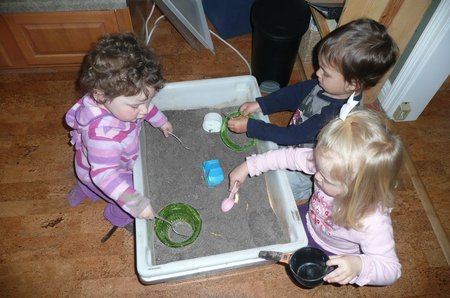
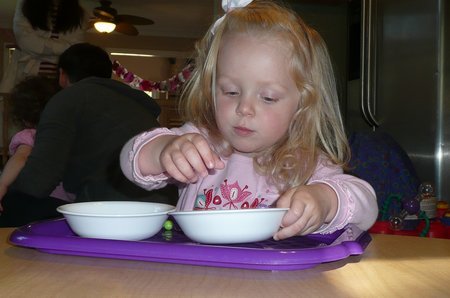
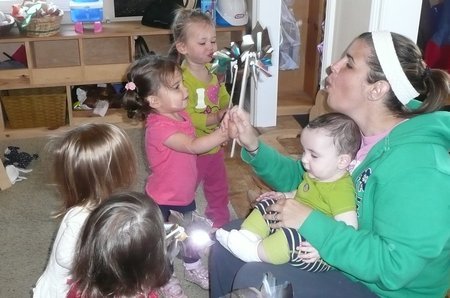
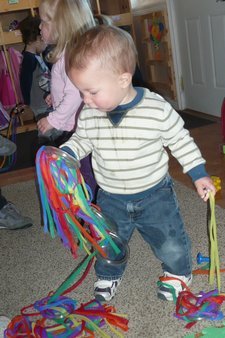
Our music today got us off and running. We started with our Hello song, a few songs in Spanish, and our new favorite, Stop and Go. Ozzie and Jada really love this one! It is fabulous to watch the children respond to Paulina singing different directions to them like “move slowly”, “run fast”, and “STOP!” We used the scarves, rainbow streamers, and shakers today.

We used our new beautiful donuts today that Miss Paulina made for our donut shop song. We played our name game and read stories about monkeys. Elizabeth, who is bananas about our monkeys, arrived just in time. Our morning would not have been complete without some Frosty, requested by Jada and Chloe. We love how Jada sings, dances, and reads books all at the same time! Talk about multi-tasking! We also enjoyed reading some new books that Tami picked up for us. They showed great attention span while listening to “I don’t want to take a bath”, an adventure about a tiger who tries to get out of taking a bath while meeting new friends in the forest.

Some of our friends learned how to play Connect Four in the kitchen. They were very interested in figuring out how to drop the coins into the slots and counting them falling into the columns.

We had a great time outside pulling friends on sleds and enjoying some sunshine. We don’t have much snow left, but there was enough on the flat area to make it work. Our favorite moment was when four children piled in one sled and giggled together as they were pulled across the patchy snow. It was very sweet to see the way Elizabeth took care of Sloane by having her sit on her lap so Sloane wouldn’t fall back when the sled moved. Jada took a turn pulling friends and was able to pull one at a time.

12-12-11 017 12-12-11 016

12-12-11 004 12-12-11 006

Lunch today was noodles with red sauce and cheese (some had couscous with beans), mixed veggies, apples. PK thought it would be fun to paint his face and head orange with sauce to match his shirt! PK says “Eating should be an experience!”

12-12-11 019

Enjoy the day, may your heart be filled with holiday blessings!

WF Daily Explorations, Monday 12.12.11

This morning we had tumbling on the blue bus! The children worked on their hand eye coordination with balls and the parachute. They played catch with the beach ball and the small balls. They used the parachute for a popcorn game and tent.

009

In the spirit of Christmas, we added a few new holiday materials for the children to explore: Christmas cards at the art table, Christmas cards, mail box, and mail carrier items in housekeeping, and a Christmas tree at the light table. Between these new interests and small group stories, the children stayed busy all morning long with these 4 things! We saw super long attention spans as they worked together to deliver mail and to make their own Christmas cards. It was such a nice morning!

(Side note…we would love to have your old Christmas cards for next years art/dramatic play!)

Melinda was the last of WF/WWF teachers to succumb to the stomach bug going through. We wish her a speedy recovery. We have a few other friends still in recover from a bout with it this weekend.
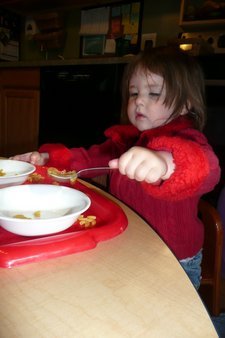
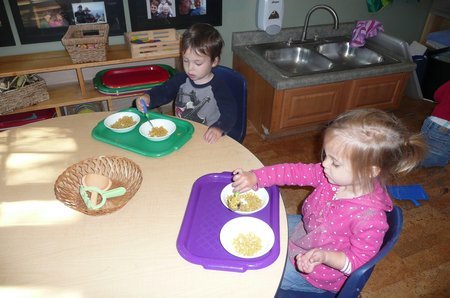
For lunch we had whole wheat pasta with marinara, French green beans/carrots, and my new sneaky fruit combo: avocado/apple pieces with cinnamon. Several of my friends really enjoyed it! For snack we will have pumpkin bread and raisins.
003

007

006

017

018

016


008